
Why Ongoing Hearing Aid Maintenance Matters for Long-Term Clarity
Old Town on a Friday night gets loud fast, bands playing outside, patios

By: Heidi Martin | June 25, 2026
A hearing evaluation is often the beginning of a larger conversation. The testing itself may only take a certain amount of time, but the results can raise questions you hadn’t considered beforehand.
Many people arrive expecting to learn how well they hear. They leave with new questions about the results, the testing process and what those findings mean.
That’s one reason questions are an important part of the appointment. A hearing evaluation isn’t only about gathering information.
It’s also a chance to discuss concerns and clarify unfamiliar terms. The conversation can help connect the results to the reason you scheduled the appointment in the first place.
Knowing what to ask can make that discussion more productive and help you better understand the information you’ve been given.
Your hearing evaluation results are typically plotted on a chart called an audiogram. The audiogram shows the noises you were able to hear during testing.
Those sounds are measured at different pitches or frequencies. Lower pitches appear on the left side of the chart.
Higher-pitched sounds appear on the right. Loudness is shown vertically. Sounds near the top of the graph are softer, while sounds farther down are louder.
Each symbol on the audiogram represents a response you gave during testing. As those symbols are plotted across the chart, they create a visual record of your hearing at different pitches.
Rather than providing a single score, the audiogram shows where hearing is stronger and where it may be more limited.
It also shows whether those patterns are similar in both ears. That’s one reason hearing specialists spend time reviewing the chart after testing.
Your hearing test measures how well you hear different sounds, but it doesn’t capture everything about the environments you spend time in each day.
Ask your hearing specialist whether your work, hobbies or listening habits could be connected to your results.
Time spent around loud machinery, power tools, firearms, live music or headphones at high volume can affect hearing over time. Sharing details about your routine helps your hearing specialist compare those sound exposures with the hearing changes shown on your evaluation.
Ask your hearing specialist what type of hearing loss was identified and where it is occurring within the ear. Hearing loss is often grouped into categories like conductive, sensorineural or mixed.
Those terms describe the part of the ear that’s involved. They don’t describe how much hearing has changed. The level of hearing loss is a separate measurement.
It refers to how loud sounds needed to be before you could hear them during testing. That’s why two people can have the same type of hearing loss but different audiogram results.
It’s also helpful to ask how those findings appear on your audiogram. The chart doesn’t just show that hearing loss is present. It shows where it occurs.
Some audiograms show changes mainly in higher-pitched sounds. Others show changes across a wider range of frequencies. The location of the symbols on the graph helps explain the type and level identified during testing.
Once you have your results, you may wonder what caused your hearing loss. Hearing loss doesn’t always start in the same part of the ear.
Your test results may provide clues about where the problem is occurring. The issue may involve the outer or middle ear, like earwax, fluid or changes that affect how sound travels through the ear.
It may also begin in the inner ear, where tiny sensory cells convert sound into signals for the brain. Ask whether your results point to one likely cause or several possible factors.
Age, noise exposure, certain medications, medical conditions and family history can all contribute to hearing changes. Your hearing specialist can explain what they see in your test results and whether anything suggests the need for additional medical evaluation.
Treatment options depend on your test results and the type of hearing loss identified during your evaluation. Ask which are available for your situation and what each option is designed to address.
These can include:
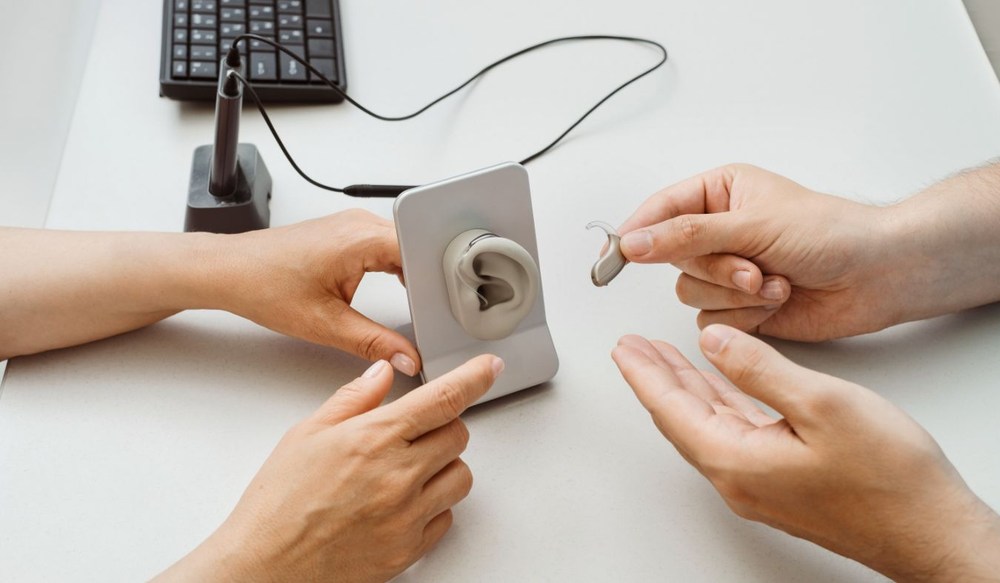
Each style sits differently on or in the ear. They also differ in visibility, controls, battery options and maintenance requirements.
Ask your hearing specialist why they recommend a particular style. Ask what differences you would notice between the available options.
You can also discuss how each style is worn and whether certain features fit situations that matter to you. Knowing the reasons behind a recommendation makes it easier to compare styles and decide which one best fits your needs and preferences.
When discussing hearing aids, ask what separates the available options and why one device may be recommended over another. Devices may differ in battery type, phone connectivity, audio streaming capabilities and background noise settings.
Some include automatic features that respond to changes in your surroundings, while others require more manual adjustments.
If more than one option is available, ask what you would notice from one device to the next during conversations, phone calls or time spent in noisy places. A feature list only tells part of the story.
Asking how those differences affect the listening experiences you encounter most often can provide a better idea of what to expect from each device.
Communication difficulties don’t always have a single solution. Depending on where and when conversations become challenging, different tools and strategies may be available:
They check how the devices fit, whether they feel comfortable and how different sounds come through the speakers. You may listen to voices, environmental sounds or recorded speech while settings are adjusted.
Additional adjustments are often made after you’ve had time to wear the devices. You might notice that certain sounds seem too loud, too soft or different from what was expected.
Follow-up appointments give you a chance to describe those experiences. The settings can then be adjusted based on what you hear during conversations, while watching television or in other listening environments.
A hearing appointment is rarely the last step. Follow-up visits give your hearing specialist a chance to see whether anything has changed since your evaluation.
If hearing aids were recommended, adjustments may be made after you’ve had time to wear them in different settings. You may discover that certain sounds are harder to hear or certain settings aren’t working different than expected once you return to your normal routine.
Future appointments may also include repeat hearing tests. Comparing new results with previous evaluations shows whether your hearing has changed over time.
Those records allow your hearing specialist to track patterns, monitor progression and make adjustments when needed. They also provide a point of reference if new hearing concerns develop later.
Your hearing specialist wants you to leave with a clear picture of where things stand. The questions you ask are just as much a part of the appointment as the testing itself.
If something in your results didn’t quite land, or you want to understand how a specific finding connects to something you’ve been experiencing, say so.
The more specific you can be about what you’re noticing in everyday life, the more productive the conversation tends to be. If you still have questions after your hearing evaluation, the team at Preferred Hearing Aid Center in Wichita, KS, can help.
Whether you’re coming in with a list of questions or you’re not sure where to start, we’ll walk you through your results and explain what they mean. Give us a call at (316) 710-8734 to schedule an appointment or learn more about your next steps.
Old Town on a Friday night gets loud fast, bands playing outside, patios
By: Heidi Martin | July 26, 2026
A hearing evaluation is often the beginning of a larger conversation. The
By: Heidi Martin | June 25, 2026

Your ear feels a little off. Maybe there’s a dull ache, it feels
By: Heidi Martin | February 20, 2026